Read about upcoming changes to UnitedHealthcare coverage.
Call us today at (646) 962-4000 to schedule an appointment or schedule your colonoscopy online.
If you need an exam to look at your gastrointestinal (GI) tract or the surrounding organs, then an endoscopy is performed. At Weill Cornell Medicine, our experts provide convenient, quality endoscopy services to help get to the bottom of your health issue. We have state-of-the-art equipment, and each patient has their own private room for assessment and recovery.
An endoscopy gets its name from the tool it uses: a long, thin tube called an endoscope. A tiny camera at the end of the scope provides a real-time video feed of what is going on inside your body. Your provider reviews this video footage to identify a variety of health issues.
The procedure is known by many names, which often depend on what body part your provider investigates. Based on your needs, you may have one of the following:
● Endoscopic retrograde cholangiopancreatography to access the bile duct, pancreatic ducts or any other blocked organ
● Colonoscopy for your entire colon
● Sigmoidoscopy for the bottom section of your colon
● Ultrasound of your GI tract and surrounding organs
● Upper gastrointestinal endoscopy for your stomach and esophagus
Certain endoscopies allow physicians to combine diagnosis with treatment. For example, if an abnormal growth is found during a colonoscopy, your provider can remove the growth immediately. As a result, precancerous lesions don’t have the chance to become cancer. Cancerous cells removed this way have no chance to spread, which helps prevent the cancer from progressing and requiring additional treatment.
Endoscopy can help detect and diagnose many diseases throughout the body. Your provider may use an endoscopic exam to diagnose one of the following:
● Cancer or polyps of the colon
● Cirrhosis of the liver
● Dysphasia
● Gallstones
● Gastrointestinal bleeding
● Jaundice
● Pancreas, liver and bile duct cancers
● Pancreatic cysts
● Pancreatitis
● Reflux and gastroesophageal reflux disease (GERD)
● Submucosal lesions
● Ulcers
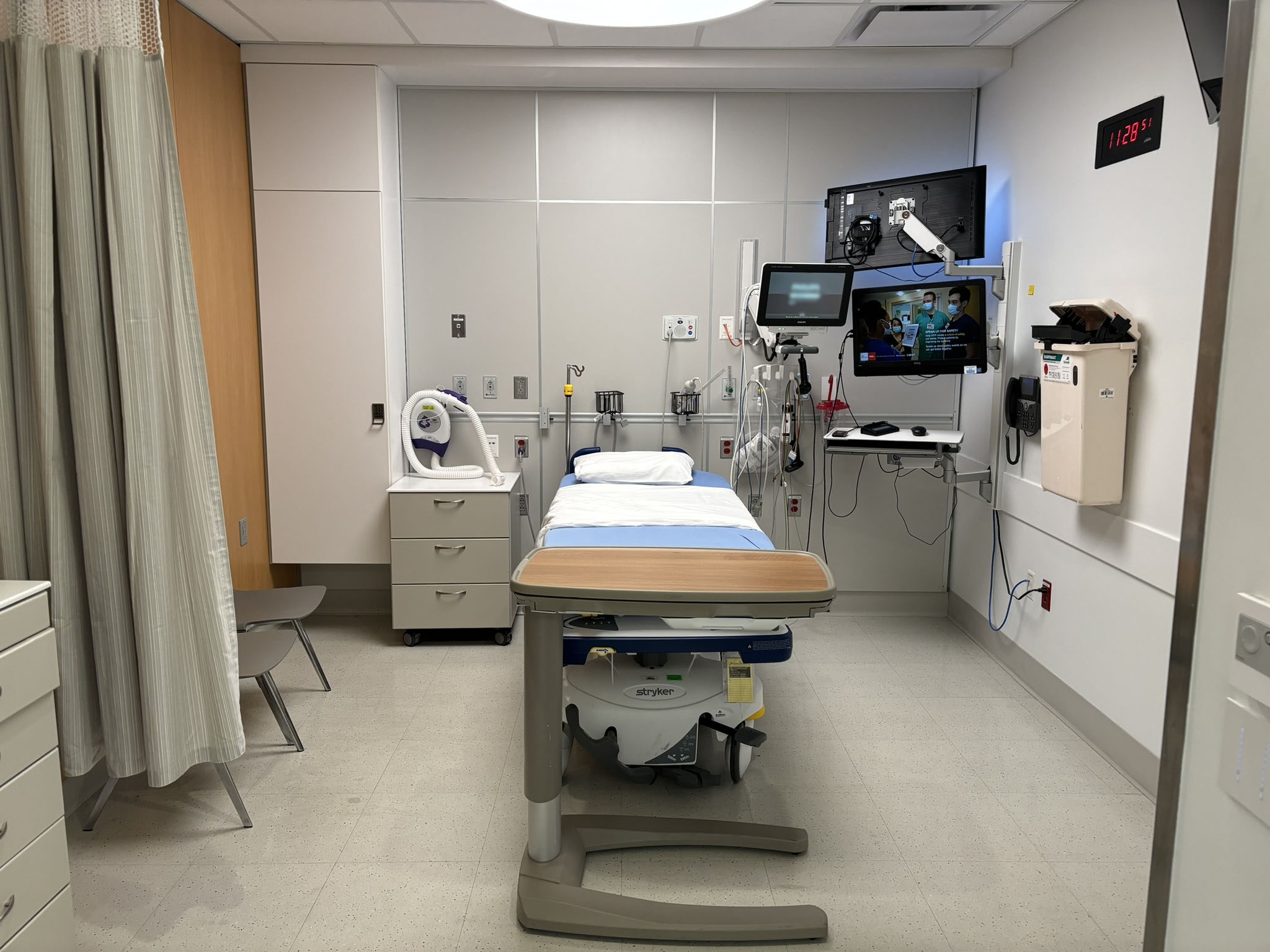
Patient Room in DHK
The Division of Gastroenterology and Hepatology at Weill Cornell Medicine and NewYork-Presbyterian Hospital provides a full spectrum of diagnostic and therapeutic endoscopic services. Our team combines advanced technology with world-class expertise to deliver safe, effective and compassionate care for each patient.
Endoscopy allows physicians to examine the digestive tract using a flexible instrument equipped with a camera and light. These minimally invasive procedures help diagnose and treat a wide range of gastrointestinal conditions, often avoiding the need for surgery.
We perform all standard and advanced endoscopic procedures, including:
Upper Endoscopy (EGD) – evaluation of the esophagus, stomach, and duodenum
Colonoscopy – detection and removal of polyps; colorectal cancer screening
Flexible Sigmoidoscopy – examination of the lower colon
Capsule Endoscopy – wireless visualization of the small intestine
Endoscopic Retrograde Cholangiopancreatography (ERCP) – treatment of bile duct and pancreatic disorders
Endoscopic Ultrasound (EUS) – high-resolution imaging for pancreatic, biliary, and gastrointestinal lesions
Endoscopic Mucosal Resection (EMR) / Endoscopic Submucosal Dissection (ESD) – removal of large or complex polyps
Endoscopic Sleeve Gastroplasty (ESG) – minimally invasive weight-loss therapy
Peroral Endoscopic Myotomy (POEM / G-POEM) – treatment for achalasia and gastroparesis
Radiofrequency Ablation and Cryotherapy – for Barrett’s esophagus and precancerous conditions
Hemostasis, Stent Placement, and Dilation – control of bleeding, relief of obstruction, and treatment of strictures
Our team also collaborates with colorectal surgery, oncology, and radiology to provide comprehensive management for complex gastrointestinal diseases.
Gastroesophageal reflux (GERD) and Barrett’s esophagus
Peptic ulcer disease
Gastrointestinal bleeding and anemia
Colon polyps and colorectal cancer prevention
Pancreatic, biliary, and liver disorders
Inflammatory bowel disease (Crohn’s disease, ulcerative colitis)
Motility and swallowing disorders
Obesity and metabolic conditions
Use these preps if you have been told you need an extended prep, have gastroparesis or are using a GLP1 medication.
Most endoscopic procedures are outpatient and performed under sedation for your comfort. You will be monitored throughout the procedure and recover in a private area before discharge the same day.
Preparation varies by procedure:
For colonoscopy, a split-dose bowel prep is recommended to ensure a clear view of the colon.
For upper endoscopy or EUS, fasting is required after midnight.
Our nursing team will review personalized instructions prior to your visit.
Your referring physician receives a detailed report, including images, immediately after your procedure.
Our innovative facility offers endoscopic services on an outpatient basis and aims to make your experience stress-free and convenient.
Service in our state-of-the-art David H. Koch Center includes:
Nationally recognized specialists in diagnostic and therapeutic endoscopy
State-of-the-art equipment and dedicated endoscopy suites
Comprehensive care integrated with radiology, surgery, and pathology
Emphasis on safety, quality, and comfort for every patient
Your comfort is our top priority throughout the entire process. We understand even routine procedures can be daunting, especially for patients getting them for the first time. We’re committed to ensuring your wellbeing every step of the way.

Endoscopic Procedure Room in DHK
To schedule a procedure or consultation, please call (646) 962-4000 or request an appointment online.
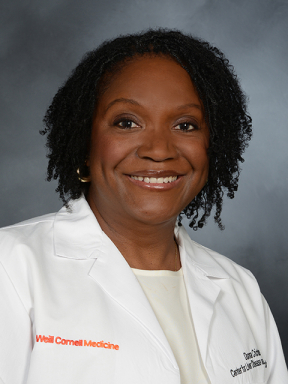
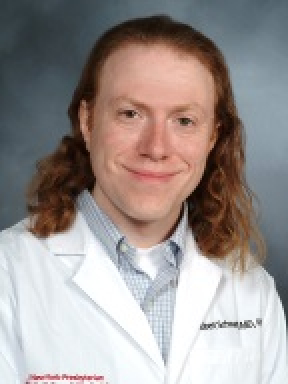
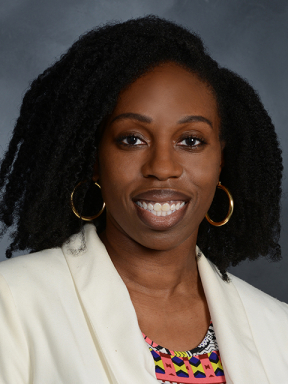
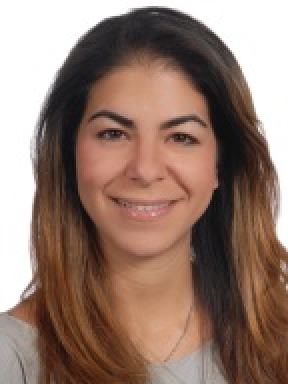
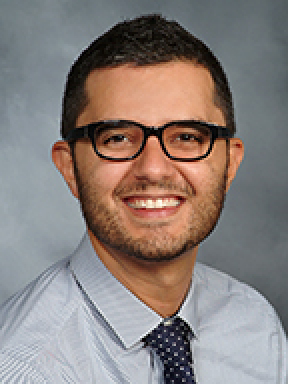
Our board-certified gastroenterologists are experts in providing comfortable colonoscopies and endoscopies to screen, diagnose and treat gastrointestinal disorders. Learn more about our doctors who perform endoscopies.