Read about upcoming changes to UnitedHealthcare coverage.
A UPJ obstruction occurs when there is a blockage between the kidney and ureter. This can slow the kidney’s ability to drain urine.
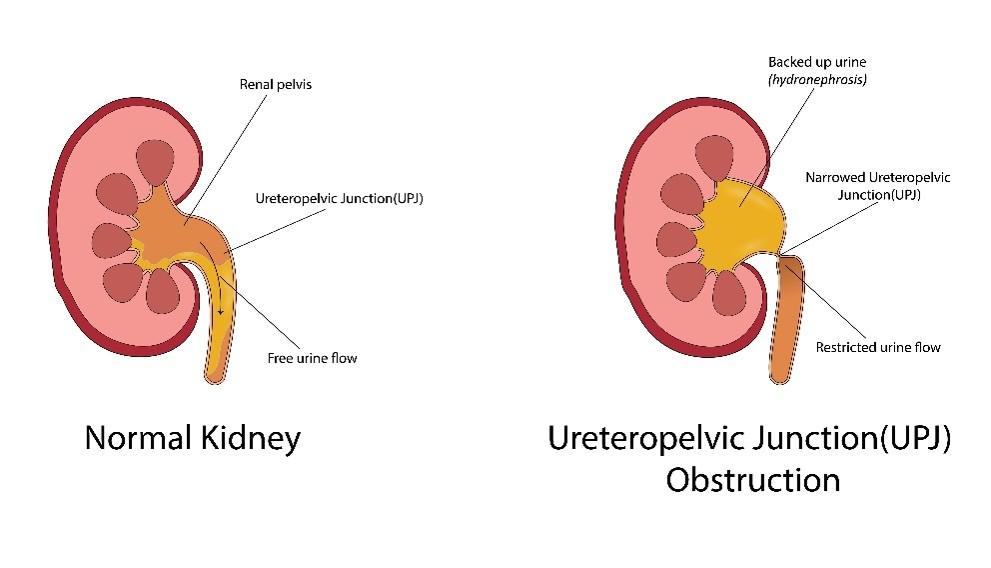
UPJ obstructions may cause:
For some, they may not cause any symptoms or problems at all.
The most common cause of a UPJ obstruction is an internal narrowing of the ureter. This can be congenital (something from birth) or it can be acquired secondary to injury or surgery. The blockage can also be caused by an abnormal blood vessel crossing over to the kidney that squeezes the ureter from the outside. Other causes include an abnormally high connection of the ureter to the kidney, or a ureteral polyp.
A blockage is often diagnosed after a finding of hydronephrosis (extra fluid in the kidneys). This is often picked up incidentally during routine prenatal screening, but it can also be found on evaluation for pain in the side, urinary tract infection or recurrent vomiting. If a blockage is suspected, then another test, called a nuclear medicine MAG-3 lasix renal scan, is done to determine the function of the kidney and also confirm a delay in drainage.
Many UPJ obstructions resolve on their own without treatment and can be monitored with kidney ultrasounds over time.
Indications for surgery include worsening hydronephrosis, kidney damage, stones, urinary tract infections, recurrent vomiting or pain. The surgery is called a pyeloplasty and it can be done via with a minimally invasive robotic-assisted (insert link to robotic page) laparoscopic approach, or it can be done with an open incision.
Regardless of technique, it is typically associated with one night in the hospital and involves placement of a ureteral stent that must remain in place for about a month after surgery, after which it must be removed with a short procedure under anesthesia, where a camera is inserted into the bladder.
To request an appointment, please call our office at (646) 962-2112 or schedule an appointment with one of our providers online below. Our phone staff are available to help you Monday-Friday, from 9AM-5PM (EST).
Meet our expert providers who specialize in treating Ureteropelvic Junction Obstruction: