Conditions we treat:
- Bedwetting or nocturnal enuresis
- Daytime wetting or incontinence
- Voiding dysfunction
- Infrequent voiding
- Painful urination or dysuria
- Constipation
- Urinary frequency
- Urinary urgency
- Urinary hesitancy
- Urinary tract infection (UTI)
- Neurogenic bladder
Why choose us:
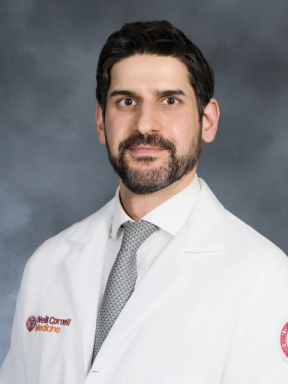
The Voiding Improvement Program (VIP) in the Department of Urology at Weill Cornell Medicine offers a full range of services for children and teens with voiding issues. We offer state-of-the-art technology, including uroflowmetry with electromyography and video urodynamics, to diagnose voiding dysfunction problems, as well as the latest treatments from behavioral coaching, biofeedback therapy and medications when appropriate. Our team also collaborates with board-certified pediatric urologists, Dr. Dix Poppas, Dr. Ardavan Akhavan and Dr. Wiygul and advanced practice providers (APPs), Amanda Neilan, C.P.N.P., M.S., RN and Denise Galan, C.P.N.P., MSN.
What to expect at your visit to the VIP:
You and your child will meet with one of our experienced pediatric nurse practitioners who are experts in treating voiding dysfunction in children and teens. We will take a detailed history and perform a painless physical exam. We may recommend that your child do additional bladder function tests, ultrasounds, x-rays, or keep a voiding diary to help diagnose the issue. After testing is complete, we will meet with your family again to review the results and create a personalized treatment plan together that achieves your goals and works for your family.
Services we offer:
The VIP offers comprehensive bladder function testing to help diagnose and treat a wide range of voiding dysfunction problems in children. These include:
- Uroflowmetry with electromyography (uroflow/EMG): a painless, non-invasive test that measures your child’s bladder size and ability to empty their bladder. We use special stickers that attach to your child’s bottom to measure their pelvic floor activity, a computerized toilet to measure the flow of urine, and safe ultrasound waves to check how well they empty their bladder.
- Video urodynamics: the gold-standard of bladder function testing. It measures the pressures inside the bladder as it fills and empties. X-rays are used to take pictures of the bladder at the same time. We insert two tubes (catheters) inside the bladder and rectum to measure the pressures, as well as special stickers that attach to your child’s bottom to measure their pelvic floor activity.
- Biofeedback therapy: some children have difficulty coordinating their pelvic floor muscles, which can lead to incomplete bladder emptying, incontinence and UTIs. If we determine that your child has this issue, we offer biofeedback therapy to help your child learn to relax their pelvic floor muscles. We attach special stickers to your child’s bottom and use visual feedback on a computer screen to help your child achieve this goal in a low-pressure and child-friendly environment.
- Behavioral coaching: for some children, voiding dysfunction can be caused by certain behaviors or lifestyle habits. These may include infrequent voiding, improper positioning on the toilet, poor diet, constipation, poor hygiene or inadequate water intake. We will work with you and your child to help identify behaviors that can cause voiding dysfunction, and come up with a plan together to help improve these behaviors both at home and in school.
- Bowel management: some children with bladder problems also have bowel problems like constipation. We offer constipation treatment strategies to optimize your child’s elimination.
- Medication: some children need medications to help their voiding dysfunction. Our team is well-versed on the benefits and risks of medication and can help you decide if medication is appropriate for your child.
Meet our expert providers who specialize in Voiding Improvement Program (VIP):