Testicle pain is a common concern in pediatric urology. There are many potential causes of testicle pain. Some issues can resolve on their own, but others require treatment.
What are the symptoms of testicle pain?
Testicle pain can present in different ways. It may occur in one or both testicles. The pain may be located within the testicle itself, above the testicle or be generalized to the entire scrotum. Testicle pain can be associated with redness or swelling of the scrotum, fever, nausea or vomiting.
What are some common causes or risk factors of testicle pain?
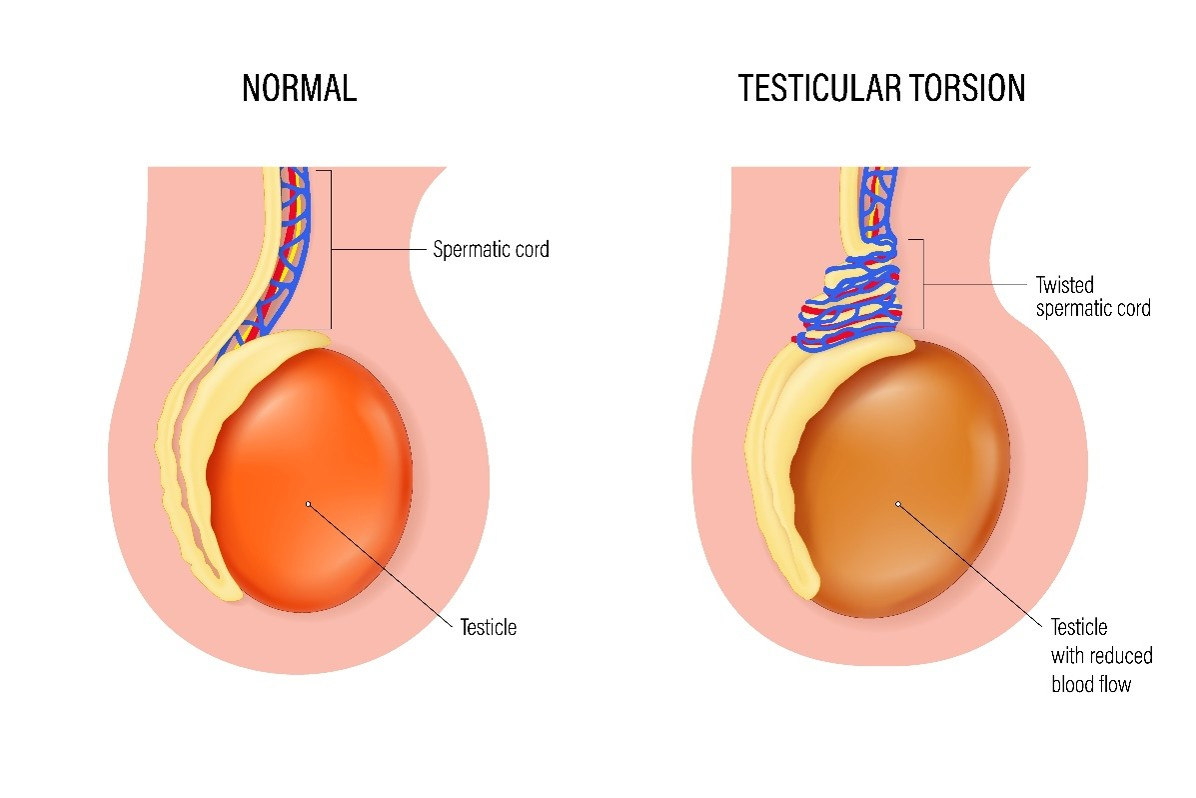
- Testicle torsion: This occurs when the testicle twists on itself. Any episode of acute testicle pain that is severe or lasts longer than 30 minutes should be evaluated in the Emergency Room, as untreated testicular torsion can result in testicle loss if not treated within a few hours.
- Appendix testicle torsion: The appendix testicle is a small piece of tissue connected to the testicle. It can twist on itself and cause acute severe pain. Treatment may involve anti-inflammatory medications, although surgery may be indicated if it recurs.
- Epididymo-orchitis: This is inflammation of the testicle and/or the epididymitis, a structure located around the testicle that collects sperm. Pain can be mild to severe, and it typically lasts about 1 – 2 weeks. Treatment usually involves anti-inflammatory medications and rest.
- Varicocele: This is when the veins in the scrotum become engorged and dilated. This may cause a dull ache in the scrotum. While pain from a varicocele is uncommon, surgery is sometimes required.
- Musculoskeletal pain: Adolescents can often experience growing pains in the groin, especially if they are very active in sports.
- Appendix testicle torsion: The appendix testicle is a small piece of tissue connected to the testicle. It can twist on itself and cause acute severe pain. Treatment may involve anti-inflammatory medications, although surgery may be indicated if it recurs.
- Epididymo-orchitis: This is inflammation of the testicle and/or the epididymitis, a structure located around the testicle that collects sperm. Pain can be mild to severe, and it typically lasts about 1 – 2 weeks. Treatment usually involves anti-inflammatory medications and rest.
- Varicocele: This is when the veins in the scrotum become engorged and dilated. This may cause a dull ache in the scrotum. While pain from a varicocele is uncommon, surgery is sometimes required.
- Musculoskeletal pain: Adolescents can often experience growing pains in the groin, especially if they are very active in sports.
What is the cause of testicle pain diagnosed?
A detailed history and in-person physical examination are necessary to evaluate testicle pain. Additionally, an ultrasound is very helpful in ruling out acute testicular torsion, especially if the test is done during the painful episode.
What are the treatment options for testicle pain?
Depending on the cause of the testicle pain, treatment may involve rest, anti-inflammatory medications or sometimes surgery. Given that acute testicular torsion can result in testicular loss if untreated within 4 – 6 hours, it is essential that testicular pain be evaluated and treated emergently.
Would you like an appointment?
To request an appointment, please call our office at (646) 962-2112 or schedule an appointment with one of our providers online below. Our phone staff are available to help you Monday-Friday, from 9AM-5PM (EST).
Meet our expert providers who specialize in treating Testicular Pain: