Read about upcoming changes to UnitedHealthcare coverage.
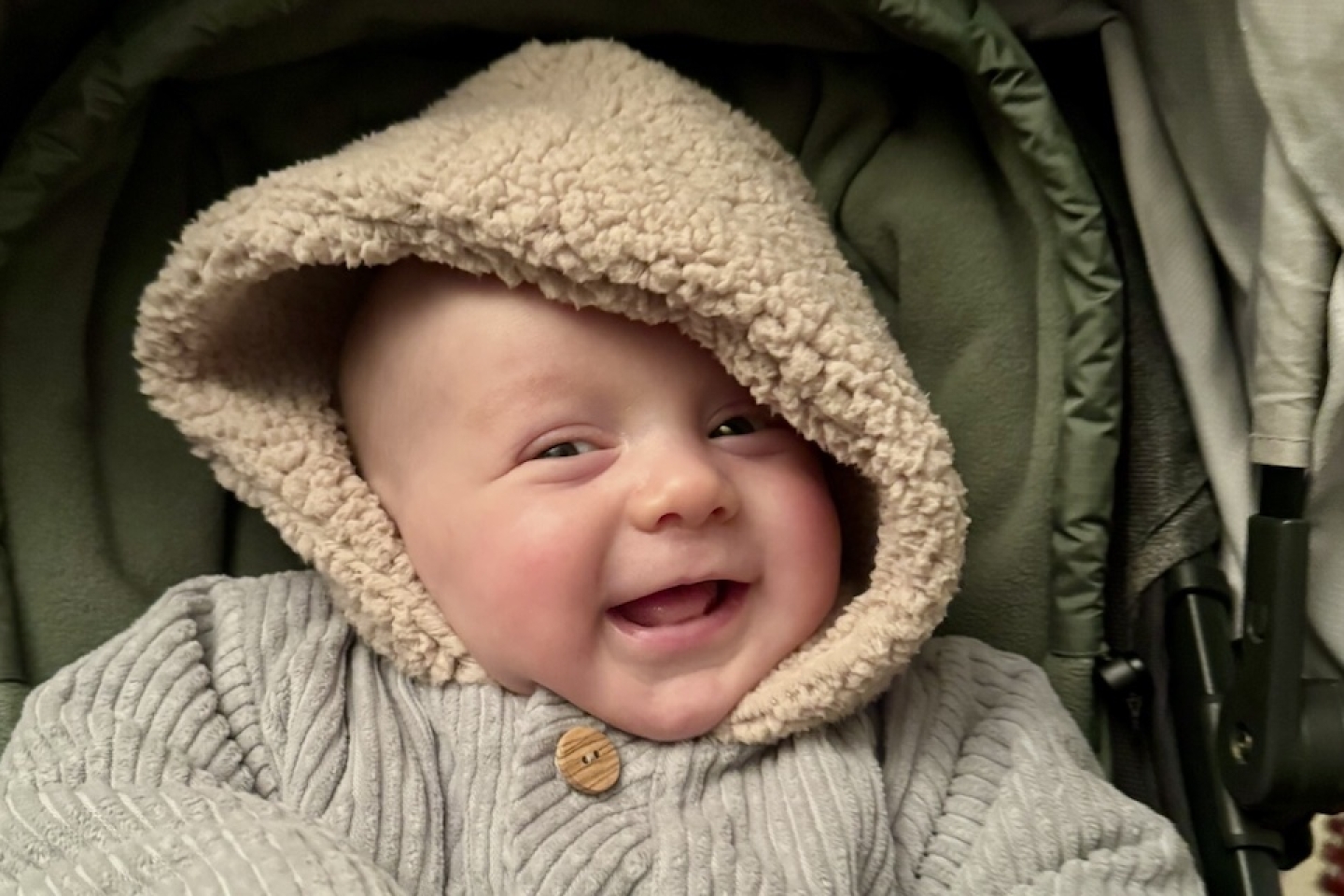
When Rachel and TJ Rumberger welcomed their second child, Rafael, life settled into the familiar rhythm of a newborn’s first weeks. He was sleepy and snuggly, with the usual cycle of feeds and naps. Then subtle changes at home began: more spitting up, unusual sleepiness and a shift in skin color. “He just didn’t look right,” Rachel said. “We knew we needed help.”
After some back and forth discussions, they made the lifesaving decision to take Rafael to the Department of Emergency Medicine at Weill Cornell Medicine. Children's health at Weill Cornell Medicine is affiliated with Children's Hospital of New York at NewYork-Presbyterian.
At triage, emergency nursing and clinicians immediately recognized that this wasn’t a typical visit. Rafael was rushed to the resuscitation bay where Pediatric Emergency Medicine attending Dr. Prakriti Gill first saw him. He was bluetinged, with cool extremities and dangerously low oxygen levels. “At four weeks old, everything is an emergency,” Dr. Gill explains.
The initial X-ray revealed a tension pneumothorax, air trapped in the chest cavity, collapsing the lung and compressing the heart. The team attempted a rapid needle decompression, but his lung didn’t reexpand.
“Pneumothoraces can occur in newborns, and chest tubes are usually effective in treating them. But in Rafael’s case, the chest tube was not fully resolving the problem. Despite initial improvement, the pneumothorax persisted and even worsened, requiring careful monitoring and additional intervention,” said Dr. Sophie M. Berger, Pediatric Pulmonologist.
Through it all, the team made sure Rachel and TJ understood each step. “There were 10–12 people around our tiny baby, and everyone stayed calm and kept us informed,” TJ recalled.
Dr. Stephen Oh, the first pediatric surgeon to respond in the ED that night, recalls, “Rafael’s initial presentation was acutely emergent and lifethreatening. He was saved and resuscitated through a collective and universal effort from all the teams.”
Pediatric anesthesiologist Dr. An Kim prepared to sedate Rafael safely. Sedating a 4-kilogram newborn in respiratory crisis requires a razorthin balance of keeping the baby still and comfortable while protecting a fragile airway. “This was one of the more stressful situations,” Dr. Kim said, “but everyone moved quickly and cohesively.”
Soon after, pediatric surgeon Dr. Oh placed a pigtail catheter, a small chest tube, to relieve the trapped air.
Within minutes, Emergency Medicine, Surgery, Anesthesia, Nursing, Radiology, and the Pediatric ICU were operating as one team in a manner that was precise, calm, and focused on stabilizing Rafael.
The chest tube stabilized Rafael enough for transfer to the Pediatric Intensive Care Unit (PICU). But his recovery was complicated. He spent 20 days in the PICU and 22 days in the hospital. Imaging showed persistent air leaks. A viral illness with a superimposed bacterial infection added to the challenge. He ultimately required three pigtail catheters to drain multiple pockets of trapped air.
For Rachel and TJ, it became an endurance test. “We were living X-ray to X-ray,” Rachel said. “Every time we saw a little progress, we hoped it was a turning point.”
When one stubborn leak refused to close, pediatric surgeon Dr. Angela Chiweshe who was leading Rafael’s care after his first night in the hospital, and the team recommended an autologous blood patch, a technique rarely used in newborns, injecting a small amount of Rafael’s own blood into the pleural space to help seal the leak. After careful discussion and consent, the team proceeded.
The result was immediate.
The leak sealed, Rafael’s lung fully expanded, and chest tubes could finally come out. For the first time, going home felt within reach.
Rafael was discharged just before the holidays. At home, he began doing what newborns do best, eating, growing, and meeting milestones. Because of his prolonged hospitalization, he’s working with physical therapy to rebuild strength and he’s thriving. Doctors will also be closely monitoring Rafael's nutrition and growth, breathing pattern and any signs of respiratory infection or breathing difficulty.
“Rafael’s follow-up care includes regular visits with the primary care pediatrician, surgeon, and pulmonologist, along with chest imaging as needed and careful monitoring for any recurring breathing issues. The focus is on preventing further lung injury and supporting healthy lung growth,” explained Dr. Berger.
Looking back, Rachel and TJ say what stands out most is the unity of the teams—ED, PICU, surgery, anesthesia, pulmonology, nursing, radiology, child life—moving as one for their son. “There is a light at the end of the tunnel,” Rachel said. “With the right care and followup, your child can weather the storm.”
Newborns can deteriorate quickly, and early action matters. Clinicians emphasize seeking emergency care immediately if you notice:
As Dr. Gill puts it: “If you’re concerned, I’m concerned. Come in.”

