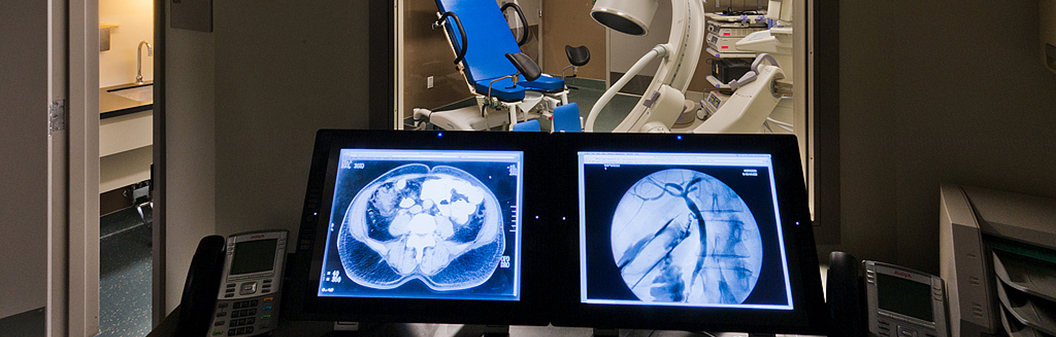
A Fully Integrated, Patient-Centered Program
Bladder cancer is a urologic cancer that develops within the bladder. It forms when urothelial cells, found within the bladder, become abnormal and multiply. Men are 3-4 times more likely than women to be diagnosed with this type of cancer. When bladder cancer is found in the early stages, it is highly treatable.
The different types of bladder cancer include:
- Transitional cell (urothelial) carcinoma: The most common type comprising 90% of all bladder cancers. This cancer is stagged according to the depth of bladder wall invasion, which also informs treatment options.
- Superficial transitional cell carcinoma: Cancer in the lining of the bladder and has not invaded the deeper bladder muscle wall.
- Squamous cell carcinoma: Less common but more aggressive type compromising 2% of bladder cancers. This cancer is due to chronic infection or inflammation.
- Adenocarcinoma: Less common but more aggressive type comprising 1% of bladder cancers. This type of cancer may be from a birth condition known as urachal abnormalities.
- Small cell carcinoma: Less common but more aggressive type comprising <1% of bladder cancers. This type of cancer is typically treated first line with chemotherapy.
At Weill Cornell Medicine, our Bladder Cancer Program is built around a simple principle: every patient deserves expert care delivered with coordination, compassion and clarity. Bladder cancer can be complex, and treatment decisions often involve multiple specialties. Our multidisciplinary program brings specialist from a variety of disciplines together so that patients receive high-quality, evidence-based care from diagnosis through survivorship.
Our team includes:
- Urologic Oncologists with extensive experience in bladder cancer surgery, endoscopic management and post-operative recovery
- Medical Oncologists specializing in chemotherapy, immunotherapy, targeted therapy and clinical trials
- Radiation Oncologists who utilize advanced image-guided radiation, adaptive planning and bladder-sparing protocols
- Radiologists & Pathologists dedicated to uro-oncology who provide rapid diagnostic review and molecular profiling
- Pelvic Floor & Continence Therapists who help optimize bladder function pre- and post-treatment
- Sexual Dysfunction & Intimacy Therapists who address functional changes, confidence, relationship needs and long-term wellness
- Oncology Dietitians, Psychologists, Social Workers, Nurse Navigators and Survivorship Specialists who support patients and families at every step
Our team meets weekly in a dedicated multidisciplinary tumor board to review each case, discuss treatment options and ensure patients receive a personalized plan.
Bladder Cancer Symptoms
The most common symptom of bladder cancer is hematuria, or blood in the urine. There are two types of hematuria - gross hematuria (visible with the eye) or microscopic hematuria (visible under microscopic laboratory examination).
Other symptoms include:
- Urine appearing yellow, orange, brown, dark or bright red, alongside hematuria.
- Burning or discomfort with urination
- Frequent urination
- Difficulty urinating
- Abdominal and/or lower back pain
- Obstruction of the urinary system, leading to flank pain and discomfort
- Rapid weight loss or extreme fatigue
Causes and Risk Factors for Bladder Cancer
The biggest risk factor for bladder cancer is smoking, which increases the risk by three-fold compared to those who do not smoke.
Other risk factors include:
- Age: Older age increases risk, with the average age of diagnosis being 73 years old
- Race: White individuals are ~2 times as likely to develop bladder cancer
- Certain occupations: Due to exposure of chemicals, occupations such as those in the dye, rubber, leather, painting and textile industries increase the risk of developing bladder cancer.
- Chemotherapy and radiation for other cancers
Prevention Strategies for Bladder Cancer
While there is not an exact way to prevent bladder cancer, you can reduce your risk by:
- Not smoking or quit smoking if you do smoke.
- Maintaining a heathy diet, with plenty of fruit and vegetables
- Limiting or avoiding working conditions that expose you to certain chemicals
Advanced Robotic Surgery for Bladder Cancer
Our surgeons are recognized nationally leaders in minimally invasive, high-precision surgery for bladder cancer, specifically known for their expertise in robotic radical cystectomy, robotic partial cystectomy and robotic urinary diversion. We have among the highest volumes in the region, allowing us to refine techniques, reduce complications and provide outstanding functional outcomes.
Robotic cystectomy offers several important benefits compared to open surgery including:
- Smaller incisions and less blood loss
- Fewer transfusions
- Lower risk of infection
- Shorter hospitalization and quicker recovery
- Improved visualization for delicate pelvic anatomy
- Greater precision for nerve-sparing techniques
Our robotic surgery program at Weill Cornell Medicine/NewYork-Presbyterian Hospital has pioneered methods to enhance both cancer control and postoperative quality of life, including nerve preservation, intracorporeal urinary diversion and enhanced recovery pathways.
Urinary Diversion Options for Bladder Cancer
We offer the complete range of urinary diversion techniques, tailored to each patient’s anatomy, medical needs and lifestyle preferences. All diversions are performed robotically and intracorporeally, which reduces complications and speeds recovery, and patients receive preoperative counseling to help them choose the diversion that best aligns with their lives.
Types of urinary diversions:
1. Ileal Conduit Diversion: A simple, reliable option for many patients, focusing on:
- Stoma placement optimized by preoperative marking
- Robotically constructed bowel segments
- Fast recovery and low long-term complication rates
2. Continent Cutaneous Diversions (Indiana pouch and others): An option for those who desire continence without a stoma bag. Key advantages include:
- Ability to catheterize discreetly
- No external appliance
- High patient satisfaction when carefully selected
3. Orthotopic Neobladder Reconstruction: A natural-feeling option that allows voiding through the urethra, providing:
- Excellent urinary control
- Preservation of body image
- Good long-term functional outcomes
Bladder Preservation for Bladder Cancer Patients
Our program is committed to bladder preservation for appropriate patients, offering one of the most active trimodality therapy (TMT) programs, which combines:
- Maximal transurethral tumor resection (TURBT) to remove visible disease
- Precision radiation therapy using image-guided and adaptive techniques to protect normal tissues
- Concurrent chemotherapy or immunotherapy tailored to tumor biology
Benefits of bladder preservation:
- Avoiding major surgery
- Maintaining natural bladder function
- Comparable cancer control for select patients
- Shorter recovery and faster return to normal life
- Option for salvage cystectomy if needed
Our team carefully evaluates each candidate through imaging, cystoscopy, pathology review and genomic profiling. We follow patients closely with advanced bladder monitoring to ensure early detection of recurrence and personalized management.
Bladder monitoring techniques:
- Blue light cystoscopy
- Multiparametric MRI
- Urine biomarkers
- Circulating tumor DNA assays
Genomics, Biomarkers and Personalized Treatment Plans for Bladder Cancer
No two bladder cancers are identical. Our precision oncology team integrates the latest genomic technologies to identify the specific mutations, pathways and immune markers driving each patient’s tumor. With an individualized approach, our team treats each patient’s cancer with maximum precision and minimal unnecessary toxicity.
Precision medicine includes:
- Next-Generation Sequencing (NGS) of tumor tissue and circulating DNA
- RNA expression profiling to determine molecular subtype
- Immunotherapy biomarkers, including PD-L1, TMB, and immune signatures
- Actionable mutation identification, such as FGFR alterations
- Hereditary cancer testing for patients with family risk factors
Genomic data is used to:
- Tailor chemotherapy or bladder-sparing therapy
- Select targeted therapies and immunotherapies
- Match patients to clinical trials
- Predict treatment response
- Monitor disease progression through liquid biopsies
Holistic Services for Bladder Cancer
Bladder cancer care does not end when treatment does. Our comprehensive support services focus on restoring function, confidence and quality of life for long-term wellness. This includes:
1. Pelvic floor rehabilitation, incorporating biofeedback, targeted exercises and personalized recovery plans to help with:
- Urinary control
- Pelvic pain
- Sexual function
- Strength and mobility
2. Sexual health and intimacy support to help manage:
- Erectile dysfunction
- Vaginal dryness or discomfort
- Changes in libido
- Body image concerns
- Relationship challenges
3. Nutrition & wellness to optimize recovery through:
- Prehabilitation nutrition guidance
- Post-surgical bowel management
- Dietary support during immunotherapy or chemotherapy
4. Psychological and emotional support to help patients cope with:
- Anxiety and uncertainty
- Life changes after major surgery
- Fear of recurrence
- Family dynamics and caregiver support
5. Survivorship programs for long-term follow up including:
- Ongoing cancer surveillance
- Late-effect monitoring
- Lifestyle counseling
- Recurrence prevention strategies
- Sexual and urinary function optimization
Why Weill Cornell Medicine for Bladder Cancer Care?
- Comprehensive care delivered by a large, coordinated team of bladder cancer specialists
- Nationally recognized robotic surgeons with specific training in urologic oncology performing even the most complex procedures
- Full range of urinary diversions performed completely robotically
- One of the region’s most active bladder-sparing programs
- Precision oncology integrated into every treatment plan
- Access to clinical trials and innovative therapies
- Supportive care that treats the whole person, not just the cancer
- Convenient coordinated appointments that reduce delays and stress
Would you like an appointment?
To request an appointment, please call our office at (646) 962-6363 or schedule an appointment with one of our providers online below. Our phone staff are available to help you Monday-Friday, from 9AM-5PM (EST).
Meet our expert providers who specialize in treating Bladder Cancer:
Upper East Side Campus
Douglas S. Scherr, M.D. Dr. Scherr is the Chief of Urologic Oncology at Weill Cornell Medicine-NY Presbyterian Hospital. He directs our bladder cancer program and has 25 years of experience treating patients with complex malignancies of the bladder. Dr. Scherr completed his urology residency at NY Hospital-Cornell University Medical Center and then went on to complete a fellowship in Urologic Oncology at Memorial Sloan Kettering Cancer Center in New York. Dr. Scherr is a pioneer in urologic oncology and robotic surgery, and was the first surgeon in NYC to perform a robotic radical cystectomy for bladder cancer and has since performed over 1000 of these procedures. He has become a leader in bladder sparing approaches as well and is quite active in understanding the genomics of bladder cancer and how to precisely guide treatment based upon individual genomic signatures of one’s bladder cancer.
Bashir Al Hussain
Brooklyn Campus:
Juan Garisto
Queens Campus
Gerald Wang
David Green
Neal Patel