Read about upcoming changes to UnitedHealthcare coverage.
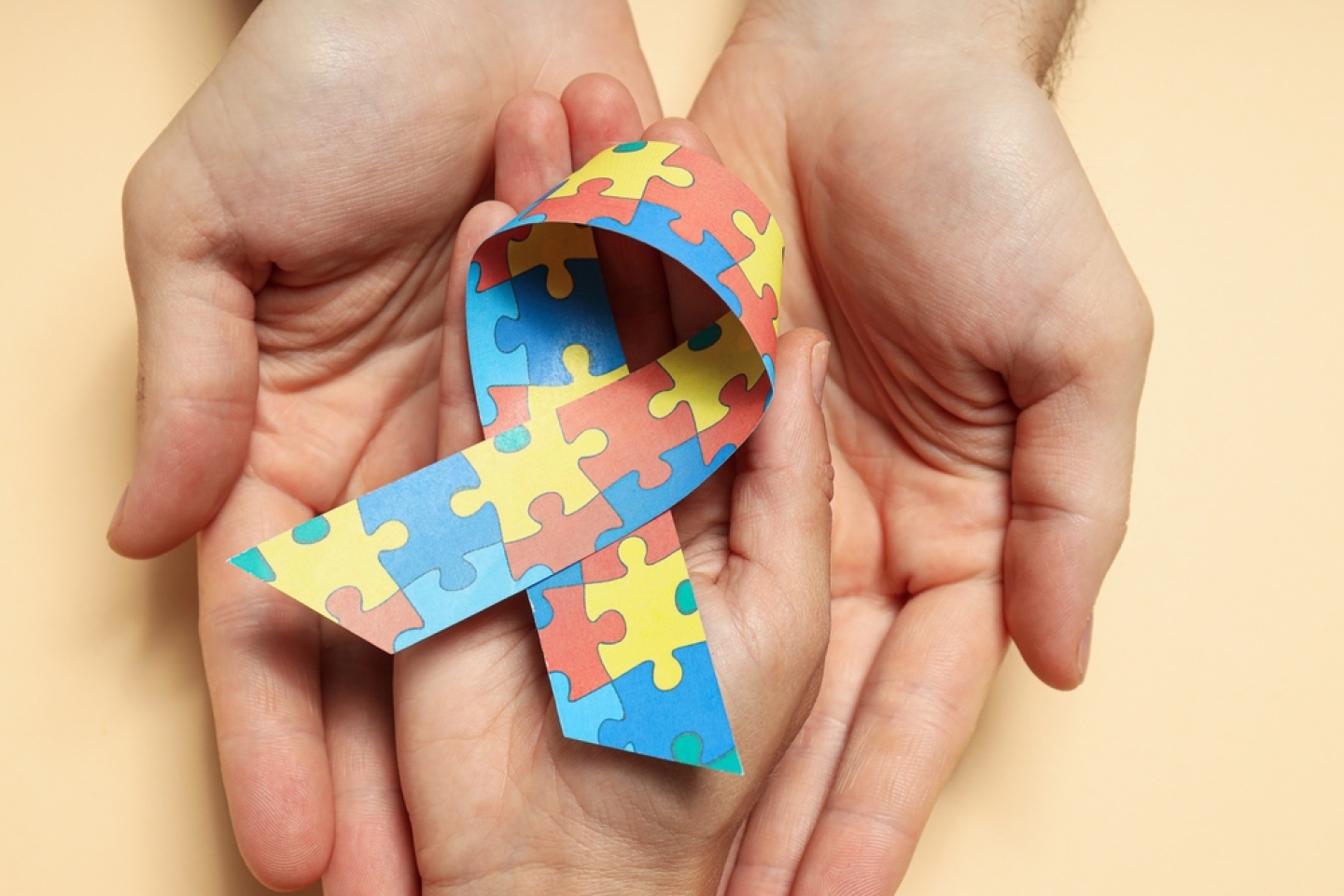
Recently, the White House and the Department of Health and Human Services (HHS) have urged pregnant women to avoid taking acetaminophen, the active ingredient in Tylenol. They insist that the widely used medication, when taken during pregnancy, is responsible for the dramatic increase in autism diagnoses in the U.S. They have also called out circumcision as the cause for autism’s rise, presumably because of Tylenol given to these infants to relieve their pain—a baseless argument if there ever was one.
In support of these assertions, the attorney general of Texas has sued the makers of Tylenol, claiming that they withheld evidence of the drug’s harmful effects on the brain development of children—a causative link that remains unproven.
Dr. Laura Riley, Chief of Obstetrics and Gynecology at Weill Cornell Medicine, recently disputed that link on CBS News as well as NBC News. She is in agreement with the great majority of her fellow physicians and with researchers across the country. For them, the relevant question is: Why do women take Tylenol during pregancy?
The main reasons are to relieve fever, headache and low back pain, Dr. Riley said. She continues to advise her pregnant patients to rely on Tylenol if they experience one or more of these symptoms. That’s because it’s safe, and it works.
Some studies have found that Tylenol use by pregnant women is associated with higher rates of autism spectrum disorder (ASD) in their offspring. In other words, there’s a relationship between the two variables. But correlation isn’t the same as causation.
That’s where our relevant question comes in. What is actually causing ASD in these children? Is it the medication itself? Or is it the reason a pregnant woman is taking it in the first place? An infection, perhaps—one that comes with fever?
According to the Society for Maternal-Fetal Medicine, an untreated fever—especially in the first trimester—increases the risk of miscarriage, premature birth and birth defects. And a fever in the second or third trimester can trigger contractions, Dr. Riley explained, potentially inducing premature labor. Obstetricians like Dr. Riley advise their patients to take Tylenol, the safest OTC medication on offer, to control a fever and manage pain.
The HHS secretary has promised to reveal the one true cause of ASD—Tylenol, a vaccine preservative or vaccines themselves—by the end of the year, but decades of research tell a more complicated story.
According to a large, 5-country study in 2019, genes account for the lion’s share of the cause: roughly 80 percent. And it’s not a case of one gene or even 10 genes, but hundreds of genes acting in concert.
Some are inherited from the child’s parents, while others are new (de novo), arising for the first time in the individual child’s DNA.
Children conceived by older parents are diagnosed with ASD more often than by their younger counterparts. That’s because people accumulate genetic mutations as they age and pass these along to their offspring. As well, many people in high-income countries postpone having children until they’re older, compounding the risk.
The contribution of these factors to autism risk is relatively small, researchers say—especially when compared to genetics---but most agree that they should continue to be studied.
However, there’s one “cause” that has been disproven time and time again: vaccines and their additives, such as aluminum and thimerosal. These continue to be targeted by the HHS secretary despite decades of research refuting his argument.
The brouhaha around vaccines and ASD can be traced to a 1998 study, originally published in The Lancet. It was carried out in just 12 children, a tiny sample. Further, the Lancet study has long since been recognized as fraudulent. Its author was paid to fabricate results to support lawsuits being brought against vaccine manufacturers.
Although the article was quickly withdrawn, and although its “findings” have long since been discredited, the vaccine-autism connection has continued to hold sway among some portion of the population.
Rising prevalence, many researchers say, has more to do with an increase in diagnoses than a rise in the actual condition.
Dr. Amy Lemelman, an Assistant Professor of Psychology in Clinical Psychiatry and a psychologist at the Center for Autism and the Developing Brain at Weill Cornell Medicine, says the diagnostic criteria for ASD have broadened.
With the publication in 2013 of DSM-V (the fifth edition of the Diagnostic and Statistical Manual of Mental Disorders), the updated criteria allow people with fewer symptoms and at different ages to be included under the autism umbrella.
Greater numbers of younger children, adolescents and adults—including more and more women—are receiving an ASD diagnosis in recent years than in the past. Greater awareness of the condition and less stigma also have boosted the numbers of people receiving the diagnosis.
As of today, more than 5 million people in the U.S. have been identified as autistic.
“Autism spectrum disorder is one of the neurodevelopmental disorders, meaning it affects the development of the brain,” Dr. Lemelman says, “with long-term consequences for communication, learning and behavior.”
However, ASD is anything but a uniform condition. It’s highly variable and heterogeneous.
There are two baskets of symptoms, Dr. Lemelman explains: the social communication domain and the restricted, repetitive behavior domain.
The social communication domain involves difficulties with social reciprocity, such as:
Restricted and repetitive behaviors include:
To receive an ASD diagnosis, a person must have either current or historical evidence of social communication symptoms and at least two out of the four categories of restricted, repetitive behaviors. The onset of symptoms would also need to have occurred in early childhood.
“Despite its variability, ASD is a unique condition,” she says, “one whose symptoms aren’t better explained by some other developmental delay or intellectual disability.”
The spectrum isn’t linear, running from mild to severe, Dr. Lemelman says.
“Its ‘severity’ has to do with the needed level of support. Does the person with ASD require some support, substantial support or very substantial support?
“It’s not that some are little bit on the spectrum and some are a lot,” she continues. “There are actually multiple spectrums related to communication, adaptive skills—those that apply to daily life—and sensory concerns, among other areas.”
Universal screening for autism symptoms is recommended by the American Academy of Pediatrics (AAP) at 18- and 24-month-old checkups, using parent-completed checklists. Older children are screened via a parent or caregiver interview, along with questionnaires that primary care providers can use. Adolescents and adults can undergo a patient interview regarding their history and their autism-specific symptoms.
An autism diagnosis will facilitate access to services in the community or at school, depending on the age of the autistic child or teen.
The crucial first step a parent can take is to get on a waiting list for a comprehensive evaluation from a reputable specialty center, like the Center for Autism and the Developing Brain at NewYork-Presbyterian.
Next, even before you receive a definitive diagnosis, start the process of seeking needed interventions for your child, such as speech therapy, occupational therapy, physical therapy or behavioral therapy. An approach called applied behavioral analysis (ABA) has been shown to be particularly effective for autistic children with behavioral issues.
Dr. Lemelman also recommends joining a parent support group, preferably in person. Individual therapy, too, can help parents process the diagnosis.
On the one hand, the federal budget includes spending cuts to autism research and support for autistic people. On the other hand, HHS just launched the Autism Data Science Initiative (ADSI) to fund studies aiming to identify the responsible environmental cause of ASD, starting with a budget of $50 million.
Critics of this new initiative are concerned about the anti-vaccine views of the department’s secretary, fearing that he’ll cherry-pick the research projects to be funded.
It’s too soon to discern whether spending cuts or increases will win the day.
Additionally, the Centers for Disease Control and Prevention (CDC), overseen by HHS, recently updated the page on its website titled Autism and Vaccines, stating the following: "Vaccines do not cause autism" is not an evidence-based claim, because studies have not ruled out the possibility that infant vaccines cause autism.” In fact, studies have long since ruled that out, but the myth lives on, fueled by the anti-vaccination views of the HHS secretary and his allies in the worlds of nonprofit, wellness and social media.
In the meantime, be aware that ASD isn’t the dreaded diagnosis it once was. While some autistic people require significant levels of support, others live productive, independent lives. For them and their families, autism isn’t some dark fate. It involves talents, learning styles and perspectives that are needed in many realms of endeavor, from academia to technology, science and the arts, and that enrich life enormously for the rest of us.
Make an appointment for a comprehensive evaluation of your child or teen at the Center for Autism and the Developing Brain here.

