October 16, 2026
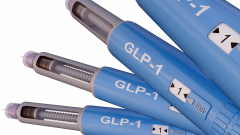
New Research on Weight Loss Medications
October 13, 2026
NEW YORK (WABC) -- Eyewitness News' Liz Cho hosted the annual, Emmy Award-winning WABC-TV special "Breakthroughs for Breast Cancer" on Sunday.The special discusses an incredible advancement in mammograms, using an iodine-based contrast dye to find up to four times as many cancers in dense breasts as a standard mammogram.Contrast-enhanced mammography could also cost less than a 3D mammogram, take less time, and catch cancer earlier.The new kind of mammogram, offered to a New York woman, made all... Read More
September 25, 2026
Disclaimer: This episode contains material of a sensitive nature, including discussions on suicide and teen mental health that some listeners may find disturbing. We know this can be a difficult subject, so please take care of yourself while listening.In the second part of this vodcast series, Yunyu Xiao, PhD discusses the less frequently studied and known signals around youth suicide ideation. She reviews the social determinants of health across various counties and zip codes. She describes... Read More
September 25, 2026
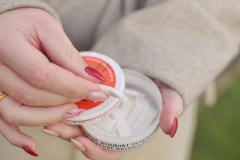
This August, the Food and Drug Administration (FDA) announced that four flavored nicotine pouches will continue to be sold in stores, at least until further review.The agency’s latest move is seen as highly problematic by the American Heart Association, the American Lung Association and the American Association of Pediatrics. The FDA claims its decision is a step toward getting adults to choose a kinder, gentler alternative to cigarettes. But numerous studies have shown that the flavored... Read More
September 21, 2026
The National Alliance on Mental Health states that as recently as 2024, half of American employees felt signs of burnout. If you’re one of them, with the right support, you can regain good mental health.“Mental wellness is an internal experience that... Read More
September 21, 2026
Got back pain that won’t go away? Help is on the way.Download the guide here or review the infographic below.
September 16, 2026
Gynecologic cancer is a unique form of cancer with wide-reaching challenges.“Any of a woman’s reproductive organs can develop cancer or pre-cancer,” says Dr. Eloise Chapman-Davis, gynecologic oncologist and associate professor of obstetrics and gynecology at Weill Cornell Medicine. “Like other cancers, these diagnoses affect women, but they also affect their family and their fertility.”What Is Gynecologic Cancer?Gynecologic cancer... Read More
September 16, 2026
Recently, the U.S. Food and Drug Administration (FDA) approved the sale and marketing of a few fruity e-cigarette flavors. Many public health officials and healthcare providers fear these new fruity flavors attract teens and put them at greater risk of potentially harmful vaping.“Although FDA authorization... Read More