Read about upcoming changes to UnitedHealthcare coverage.
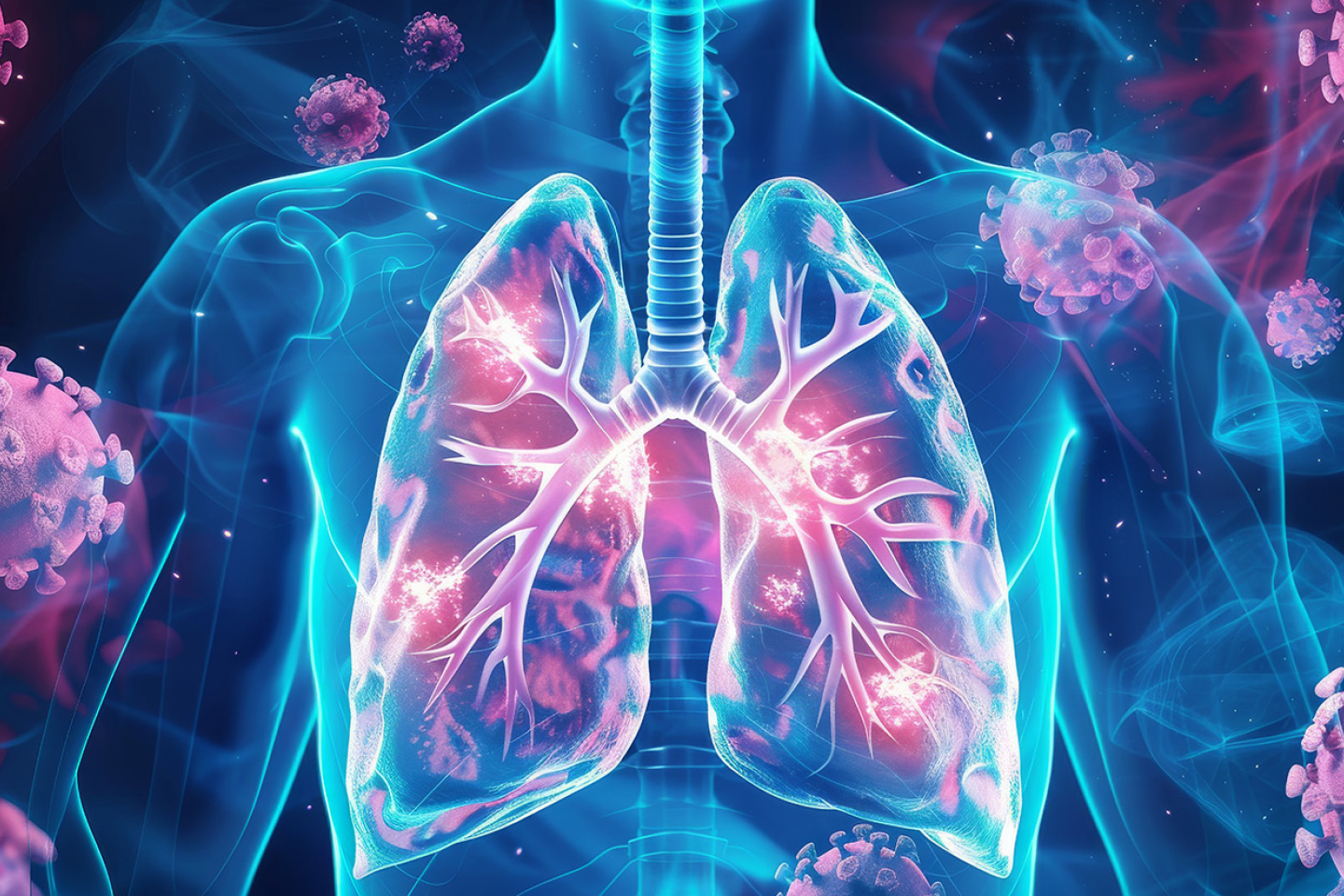
Lung cancer treatment has undergone a remarkable transformation in recent years. From minimally invasive surgical techniques to targeted therapies that can replace chemotherapy with a daily pill, the pace of progress is accelerating in meaningful ways. Overall, lung cancer care has evolved to become highly personalized and emphasize precision. For example, with precision surgery to minimize surgical morbidity, and precision therapy tailored to the molecular drivers of each cancer.
At Weill Cornell Medicine, this transformation is taking place through close collaboration between surgeons, medical oncologists, radiation oncologists and researchers. Dr. Jonathan Villena-Vargas, cardiothoracic surgeon, Dr. Christine Garcia, lung cancer medical oncologist, and Dr. Manish Shah, Director of Solid Tumor Oncology discuss how these innovations are changing what a lung cancer diagnosis means for patients today.
Lung cancer forms when cells in the lungs develop mutations that allow them to grow out of control. These cells acquire DNA damage that disrupts normal growth controls, allowing the cells to multiply and form tumors. Smoking remains the leading risk factor, linked to around 80-90% of lung cancer deaths. Other risk factors contribute to the risk of developing lung cancer, including exposure to radon, secondhand smoke, environmental pollution, and other airborne toxins.
According to Dr. Garcia, “Approximately 10-20% of lung cancers now occur in people who have never smoked, a significant and increasing portion of lung cancer diagnoses.” These “never smokers” as they are termed, are often younger, female, and of Asian descent. Research is underway to determine why this may be the case.
Learning more about the disease and how lung cancer spreads throughout the body has shifted the way it is now approached in terms of treatment options. "We're in a modern era of cancer care, especially for lung cancer," Dr. Garcia states. "We're asking 'what is the patient's cancer doing at the molecular level and what is the right treatment for them?’ on the basis of the individual and their specific cancer mutations."
Early detection is one of the most powerful tools available in improving lung cancer outcomes. Historically, many patients were diagnosed with lung cancer after experiencing outward symptoms such as a persistent cough, unexplained weight loss, or coughing up blood.
Low-dose computerized tomography scans, also referred to as CT screening—pioneered at Weill Cornell Medicine in the 1990s—allows doctors to identify lung cancer before symptoms even appear. “Detecting cancer at an earlier stage dramatically improves outcomes and expands treatment options,” Dr. Villena explains. “This is especially meaningful for patients who might otherwise delay care due to fear or their busy lives, since earlier detection means far more effective treatment options.”
“Instead of discovering disease when it is already advanced, early screening identifies cancers that are smaller, more localized, and often highly curable,” Dr. Shah says. Dr. Shah underscores that lung cancer screening is critical in shifting patient outcomes, explaining that “earlier detection often means access to less invasive surgery, more treatment choices, and better chances for cure.”
For many decades, the standard lung cancer surgery was a lobectomy, which involves removing an entire lobe of the lung. Traditionally, removing lobes of the lung required a large incision between the ribs, known as a thoracotomy, where the ribs are spread apart to allow surgeons access to the lungs. This often causes pain, long recovery times, and sometimes lasting nerve damage. Lobectomy surgery also sacrifices a lot of healthy lung tissue.
In 2023, the standard of lobectomy surgery began to shift following a landmark randomized clinical trial published in the New England Journal of Medicine which was led by researchers and surgeons at Weill Cornell Medicine. The research showed that for smaller, early-stage lung cancer tumors, surgeons do not need to remove the entire lobe of the lung and could spare healthy lung tissue without compromising cancer outcomes. This breakthrough started the concept of “precision surgery” for lung cancer, and has led to the integration of more lung-sparing techniques around the world.
Minimally invasive surgical approaches have been developed to use smaller incisions and small cameras to direct surgeons, which cut down on the need for traditional open chest surgery. However, even using minimally invasive approaches, often these instruments still need to pass between the ribs, which can cause discomfort for many patients because of the density of nerves in the area.
Most recently, Dr. Villena helped pioneer a novel technique at Weill Cornell Medicine called single-port robotic surgery. This involves a one-and-a-half-inch incision made directly below the ribs which avoids the nerve-rich spaces entirely.
“The benefits of single-port surgery for patients are substantial,” Dr. Villena said. “Avoiding the ribs means feeling less pain immediately after surgery, a reduced need for opioid pain medications, and a faster return to normal breathing and movement.”
Many patients are able to go home within 24 hours of single-port robotic surgery and resume daily activities much sooner than was previously possible. Just as importantly, the operation itself is as effective at removing lung cancers as other surgical options.
One of the most sweeping changes in lung cancer care is the move toward biomarker-driven treatments. For many decades, a lung cancer diagnosis meant all patients would get chemotherapy, which offered limited personalization and was more of a one-size-fits-all approach.
Now, before starting any lung cancer treatment, Dr. Garcia stresses the importance of comprehensive biomarker testing, which allows physicians to understand the molecular footprint of the tumor. Tumor tissue is analyzed using next-generation sequencing to look for specific genetic alterations that drive cancer growth. Biomarkers act like an instruction manual for the cancer and allow physicians to understand how the cancer behaves and how best to treat it.
"I say over and over again to my patients, we need to wait for the molecular testing results to come back because I want to give you the right treatment, not the fastest treatment," she advises.
Biomarkers like EGFR, ALK, and ROS1 mutations allow oncologists to match patients with targeted therapies—often a daily oral pill—that can be dramatically more effective than chemotherapy.
By determining up-front if a patient has a biomarker that can be targeted, treatment can be specifically tailored to that patient rather than having to try other treatment types first. Dr. Shah frames the broader principle clearly: "The earlier in the course of treatment that you target the biomarker, the better the outcomes can be."
Targeted therapies are also changing how metastatic lung cancer that has spread to other parts of the body are managed. These drugs can control disease and may allow patients to delay or avoid other types of treatment. These therapies represent a shift in outcomes and quality of life for patients by targeting each individuals’ cancer specifics.
Immunotherapy has also reshaped treatment options for many lung cancer patients, including those whose tumors do not have a biomarker that can be treated with mutation-specific targeted therapies. Rather than attacking cancer cells directly, immunotherapy works by activating the patient’s own immune system to kill cancer cells.
The first immunotherapy for lung cancer was approved by the U.S. Food and Drug Administration (FDA) in 2015. This led to further studies and subsequent approvals of other immunotherapies both alone and in combination with other treatments. These immunotherapy drugs were first studied and approved in advanced cancers where surgery was no longer an option. Now, as researchers learn more, they are studying if immunotherapy could be even more effective if used before the cancer is removed, an approach known as neoadjuvant immunotherapy.
Dr. Villena explains the rationale behind this approach, “When immunotherapy is given before surgery, the tumor and its surrounding lymph nodes remain intact. By exposing and educating the immune system to the tumor while it is still present in the body, there may be a stronger immune response, and one that continues to recognize cancer cells even after surgery to remove the tumor is complete.”
Dr. Villena’s laboratory is continuing to conduct research in this area to further explore this strategy. By studying tumors and the benign draining lymph nodes from patients who receive immunotherapy prior to surgery, his team is uncovering how immune responses develop and why some patients respond better than others. These insights may ultimately help clinicians overcome resistance to treatment and tailor immunotherapy more precisely for each individual patient.
All of these approaches work best when specialists work together. At Weill Cornell Medicine and NewYork-Presbyterian Hospital, a weekly tumor board brings together surgeons, oncologists, and other experts to review each patient as a team—making care faster, more coordinated, and better for patients overall.
Looking ahead, the team sees the future of lung cancer care as defined by further increasing personalization. "Through research, we are getting millions of data points per patient," Dr. Villena explains. "It's going to really drive how exactly to treat that one patient, not just this group of patients.”
For Dr. Garcia, this trajectory is deeply meaningful for patients newly facing a lung cancer diagnosis. The progress has been rapid with more targets being identified, more therapies becoming available, and more combinations of treatments giving patients access to far more treatment options than even just a few years ago.
To learn more about the latest advances in lung cancer treatment, listen to Drs. Villena, Garcia, and Shah take a deeper dive into this topic on the CancerCast podcast where they explore how innovations in surgery, biomarker testing, targeted therapy, and immunotherapy are transforming outcomes for patients with lung cancer.
Listen to the episode on Apple Podcasts, Spotify, YouTube, or the Weill Cornell Medicine website.

