Read about upcoming changes to UnitedHealthcare coverage.
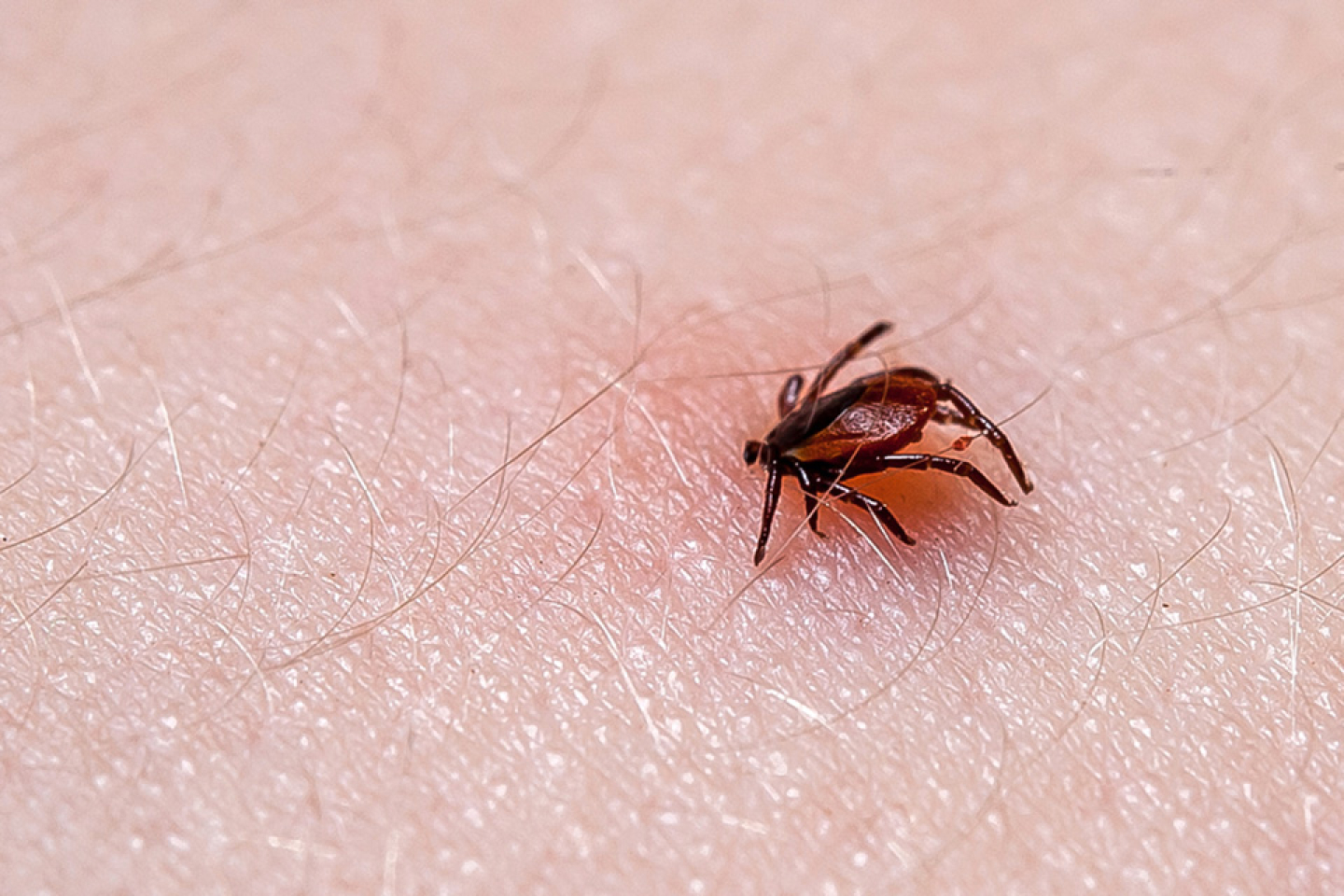
Ticks aren’t just a problem in the countryside or wilderness area. Wherever you live—in a small town, a suburb or a city—ticks are almost certainly living there too; even in New York City, where you might not expect to encounter them.
Climate change has been creating the conditions for ticks to thrive in more places than ever. As well, tick season isn’t limited to the summer months. It lasts from spring well into the late fall. Ticks may even be active on warmer winter days.
Two types of ticks are prevalent in the Northeast: deer ticks and dog ticks. As deer ticks are the purveyors of a potentially serious disease that was first identified in Lyme, Connecticut—hence, its name—we’ll focus on them.
Dr. Flavio Gaudio, an associate professor of clinical emergency medicine and associate attending physician at Weill Cornell Medicine, is also an expert on ticks and Lyme. For ten years, he served as co-director of the Wilderness and Environmental Medicine Program, a collaborative effort between the Emergency Department at Weill Cornell Medicine and Cornell Outdoor Education in Ithaca, New York.
In what follows, Dr. Gaudio will respond to your FAQs concerning the insect’s characteristics; its preferred mode of “attack”; how to deal with a tick bite; and how to avoid getting bitten in the first place. As well, he’ll discuss the symptoms and treatment of Lyme disease.
Where do ticks tend to hang out?
“Ticks are usually found in woodlands and grassy areas, where they can find their typical prey: field mice, deer and, of course, humans,” he says. “They lie in wait for someone or something to walk and brush past. Then, they latch on.
Increasingly, they’re also found in urban areas, so make sure to avoid bushes, piles of leaves and tall grass the next time you’re in Cunningham Park in Queens, Pelham Bay Park in the Bronx or any of the City’s other green spaces.
What do they look like?
Deer ticks generally live for two years, starting as larvae and proceeding through two additional stages: nymph and adult.
At the nymph stage, deer ticks are no bigger than a poppy seed. Roughly 25 percent of them carry the spiral-shaped bacteria (a spirochete called Borrelia burgdorferi) that’s responsible for Lyme disease, while 50 percent of adults have it.
Adult deer ticks, also known as black-legged ticks, are bigger than nymphs but still quite small. They have a hard, shield-like, dark brown covering. The rest of their body is tan, Dr. Gaudio says, and their 8 legs are black.
Where on my body should I check for ticks?
When returning indoors from tick-infested areas, or even from a walk in one of the City’s parks, check for ticks over the entire body—especially in the following areas:
Ticks also like beards, so if you have one, make sure to check it too.
Take a shower within an hour or two of coming indoors to potentially wash off any non-embedded ticks and make it easier to find them if they’re attached to your skin.
How should I remove a tick if I find one?
If a tick is crawling on you, remove and dispose of it by putting it in alcohol in a sealed bag or container or wrapping it tightly in tape before throwing it in the trash.
If the tick is attached to your skin, follow these tips to remove it:
Don’t:
Do:
After removing it, wash your hands, and whatever parts of your skin the tick touched, with soap and water or rubbing alcohol.
What are the symptoms of Lyme disease?
According to the Centers for Disease Control and Prevention (CDC), if you find a tick that may have been embedded in your skin for 36 hours or more, or appears engorged, it’s important to seek immediate medical attention. Your primary care provider or an emergency physician can safely remove the tick and prescribe a one-time dose of an antibiotic that can prevent Lyme disease if taken early enough.
Lyme tends to come in three distinct stages:
How is the disease treated?
The good news is that oral antibiotics are usually successful at treating Lyme disease. Sometimes, Dr. Gaudio says, IV antibiotics are needed. “Many complications of Lyme are treatable, but a small percentage of patients have long-term deficits or problems.”
But the best treatment of all, he adds, is prevention. For example, “when you're hiking, stay in the middle of the trail and avoid brushing against bushes and tall grasses. Wear long sleeves and light-colored clothing, tuck your pants into your boots, and use EPA-approved tick repellent." The same strategies can be used when you’re walking through a city park.
What are the best tick repellents?
Use any repellent that’s approved by the U.S. Environmental Protection Agency (EPA). Many contain DEET, which is also effective against mosquitoes. In addition, Dr. Gaudio recommends repellents that contain picardin or oil of lemon eucalyptus (OLE).
“A repellent containing permethrin can also be effective,” he says, “but it shouldn’t be used directly on the body. Use it on your clothing. It should last through several wash cycles.”
Is there a vaccine for Lyme disease?
Not yet, but Pfizer’s vaccine candidate is in stage 3 clinical trials, meaning it’s being tested for efficacy. It has already been proven safe, so it’s possible that we’ll see an FDA-approved vaccine a couple of years from now.
Key takeaway points
If your symptoms require emergency treatment, Weill Cornell Medicine’s emergency medicine specialists are here to help. For more information, visit the department’s website here.

