Read about upcoming changes to UnitedHealthcare coverage.
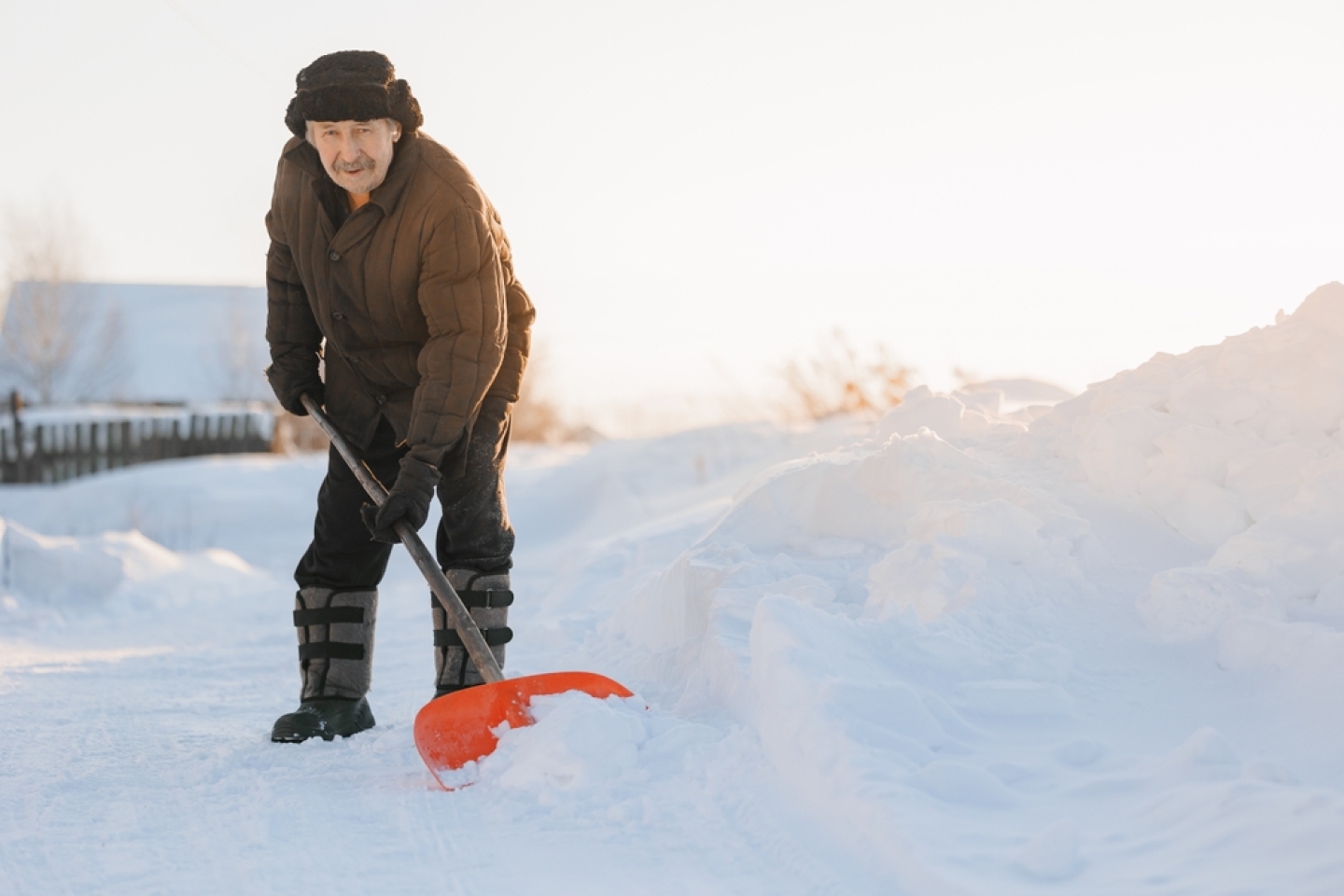
It’s riskier than heavy weight-lifting, high-intensity interval training (HIIT) and sudden high-impact types of activity. Shoveling snow is more dangerous than all of these and more, says Dr. Sam Senturia, an Assistant Attending Physician and Assistant Professor in the Department of Emergency Medicine at Weill Cornell Medicine.
In what follows, he explains why that’s the case, offering the perspective and advice you need either to forgo shoveling—especially if you have one or more risk factors—or to stay safe while tackling a potentially dangerous task.
“Shoveling snow produces higher demands on the heart than a cardiac stress test,” Dr. Senturia says. “It’s especially dangerous in people who are unaccustomed to exercise, and in those with undiagnosed coronary artery disease.”
He goes on to explain that snow shoveling can require up to 85 percent of a person’s maximum heart rate after shoveling for just 2 minutes. “After 10 minutes, your heart rate could reach 97 percent of its maximum,” he adds, “and your systolic blood pressure (the top number) could reach 200.”
Here’s another number that will stop you in your tracks: Again, after just 10 minutes of shoveling, you may have shoveled a ton of snow. That’s not a metaphor. Multiply an average of 12 “lifts” per minute by 16 pounds of snow per lift and you’ll arrive at a total of 1,900 pounds. That’s just 100 pounds short of a ton.
Dr. Senturia names some of the usual suspects—male gender, older age, a sedentary lifestyle and smoking—as reasons to avoid shoveling snow. Another strong cardiac risk factor is a family history of heart disease. Here, a “family history” refers to a first-degree relative—a parent or sibling— who has had a heart attack or other cardiac event.
While shoveling, cold temperatures can compound a person’s cardiac risk. The cold causes the blood vessels to constrict, Dr. Senturia explains, including the coronary artery, contributing significantly to a dangerous imbalance between “supply and demand.”
All of the risk factors described above can lead to what he calls a “supply and demand mismatch”: a huge demand on the heart to supply the oxygen needed by the muscles doing the shoveling, as well as a reduced supply of oxygen needed by the heart itself to keep pumping blood to these muscles as well as to all of the body’s organs and tissues.
Avoid shoveling snow at all costs if:
There’s no shame in hiring a snow removal service. In fact, it’s highly advisable to do so if you have any of the foregoing risk factors.
If you have any of the following symptoms while shoveling snow, stop immediately:
These are symptoms of angina, Dr. Senturia says. Angina, a precursor to more serious heart disease, is caused precisely by an inadequate supply of blood to the heart.
If you experience these symptoms while shoveling snow, consider it an emergency and call 911 immediately—or have a family member do the calling. “The great advantage to calling for an ambulance is the role of paramedics, who are trained to deal quickly and effectively with such emergencies,” he says.
You’ve asked your doctor whether it’s okay to shovel snow, and with no risk factors to disqualify you, you’ve been cleared. But there are still important steps you can and should take to keep yourself safe:
Wearables can be a great asset at the gym or during a run. But when it comes to a high-intensity form of exercise like shoveling snow, the jury is still out. “If you’re used to wearables, no problem,” says Dr. Senturia, “as long as they don’t give you a false sense of security. The heart’s behavior can be highly unpredictable, mainly due to the internal forces in a person’s coronary artery.
“If just one arterial plaque breaks away, it might lead to a blood clot that could obstruct the coronary artery and cause a heart attack,” he adds. His best advice in that instance? Call 911, or have a family member make the call.
Find a physician at Weill Cornell Medicine here.

