Read about upcoming changes to UnitedHealthcare coverage.
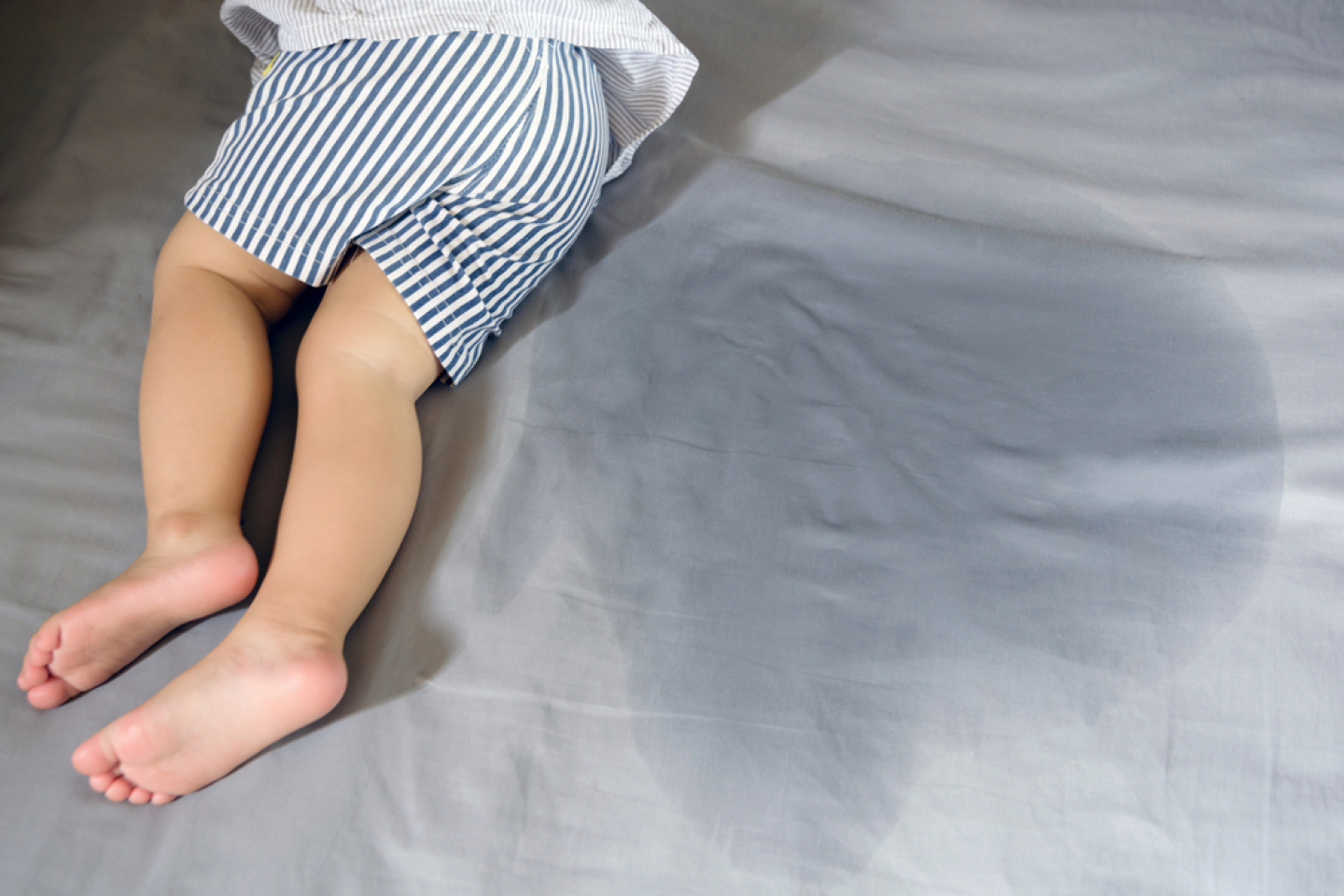
If you wake up in the morning to find that your child has once again wet the bed, you are not alone. Bedwetting is developmentally normal in children younger than 6. Additionally, 5 to 10 percent of 7-year-olds continue to wet their beds, along with 3 percent of teens.
Amanda Neilan, a nurse practitioner who sees non-surgical pediatric urology patients and families at Weill Cornell Medicine, offers two common explanations for bedwetting among children and teens:
In decades past, she says, it was believed that bedwetting was caused by anxiety or even trauma, but that notion has been largely sidelined.
“At Weill Cornell Medicine,” she says, “we focus on the physiologic causes of bedwetting and the evidence-based treatments that work for the majority of our patients.”
Types of bedwetting
There are two types of bedwetting, Amanda explains. The first, termed monosymptomatic, occurs only at nighttime, while the second is non-monosymptomatic. As such, it may cause frequent urination and incontinence during the day in addition to nighttime bedwetting.
An effective behavioral intervention
At night, many children benefit from the use of a special bedwetting alarm. “You can buy one online at a bedwetting store,” Amanda says. “It can be clipped to your child’s underwear, and it will emit a loud alarm when it detects moisture.” Over time, it will sensitize a child to the sensation of a full bladder. Even deep sleepers may do well with the alarm.
“Continue to use it for a minimum of 6 weeks,” she advises. “If there are signs of improvement—the wet spot is smaller, for example—you’ll know things are moving in the right direction. Keep a log, and check in with us a couple of times a week to report your progress.”
When 6 weeks are up, Amanda will usually meet with families to discuss their progress, and if things are improving, she encourages them to keep keep using the alarm until the child has 14 consecutive dry nights.
For 40 to 60 percent of those who use it correctly, the alarm will effect a long-term cure. But it isn’t easy, Amanda warns. Parents and child alike need to be highly motivated, and even so, it may not work.
If there’s no improvement at all after 6 weeks, she says, stop using it.
Medication
The second evidence-based treatment for bedwetting is a medication called desmopressin, or DDAVP.
As Amanda explains, children over age 6 produce an anti-diuretic hormone that helps to reduce urine output overnight. However, some children don’t make enough of the hormone. As a result, they make a large volume of urine at night, exceeding the capacity of the bladder.
DDAVP can be a helpful tool, but it’s important to stay on top of any side effects and drug interactions. A conversation with your provider will help to identify any red flags associated with taking the drug, including other medications your child is taking. As well, DDAVP only works on the night your child takes it. No need to make up for a missed dose, Amanda says. Just get back on schedule the following night.
“No blood test is needed for the purpose of diagnosis or treatment,” she adds. “A pediatric nurse practitioner will provide a clinical diagnosis in the office, based on the child’s symptoms and history.”
Treatment summary
Both the alarm and medication are valid options, but the alarm requires a high degree of motivation. The pill is easier, but it only works on the night you take it.
When to seek further help from a specialist
If your child has both nighttime and daytime symptoms, she says, it’s time to see a pediatric nurse practitioner, who will carry out a deeper assessment of the bladder. A non-invasive test called a uroflowmetry may be performed as part of that assessment.
As Amanda explains, a child with both day and nighttime issues will need to have their daytime symptoms treated first. The goal is for the child to void normally during the day. Once that’s under control, parents can choose one of the treatment options for nighttime bedwetting as described above.
One more cause of bedwetting
There’s an additional cause of bedwetting that may seem counter-intuitive: constipation!
“If a child is backed up with stool, there’s less room for the bladder,” she says, “creating undue pressure on that child-sized organ.” The solution? “We’ll assess and treat the constipation.”
In conclusion
Treatment may not work at first, but don’t be discouraged, she says. “We still have other tools in our toolkit.
“Rest assured,” she concludes. “Your child’s bedwetting problem isn’t your fault or your child’s fault. There’s almost always another option.
We can help the majority of our patients. At a minimum, even if the child’s sheet isn’t totally dry in the morning, it will be way better.”
Make an appointment with a pediatric nurse practitioner at https://weillcornell.org/pediatric-urology or by calling (212) 746-5337.

