Read about upcoming changes to UnitedHealthcare coverage.
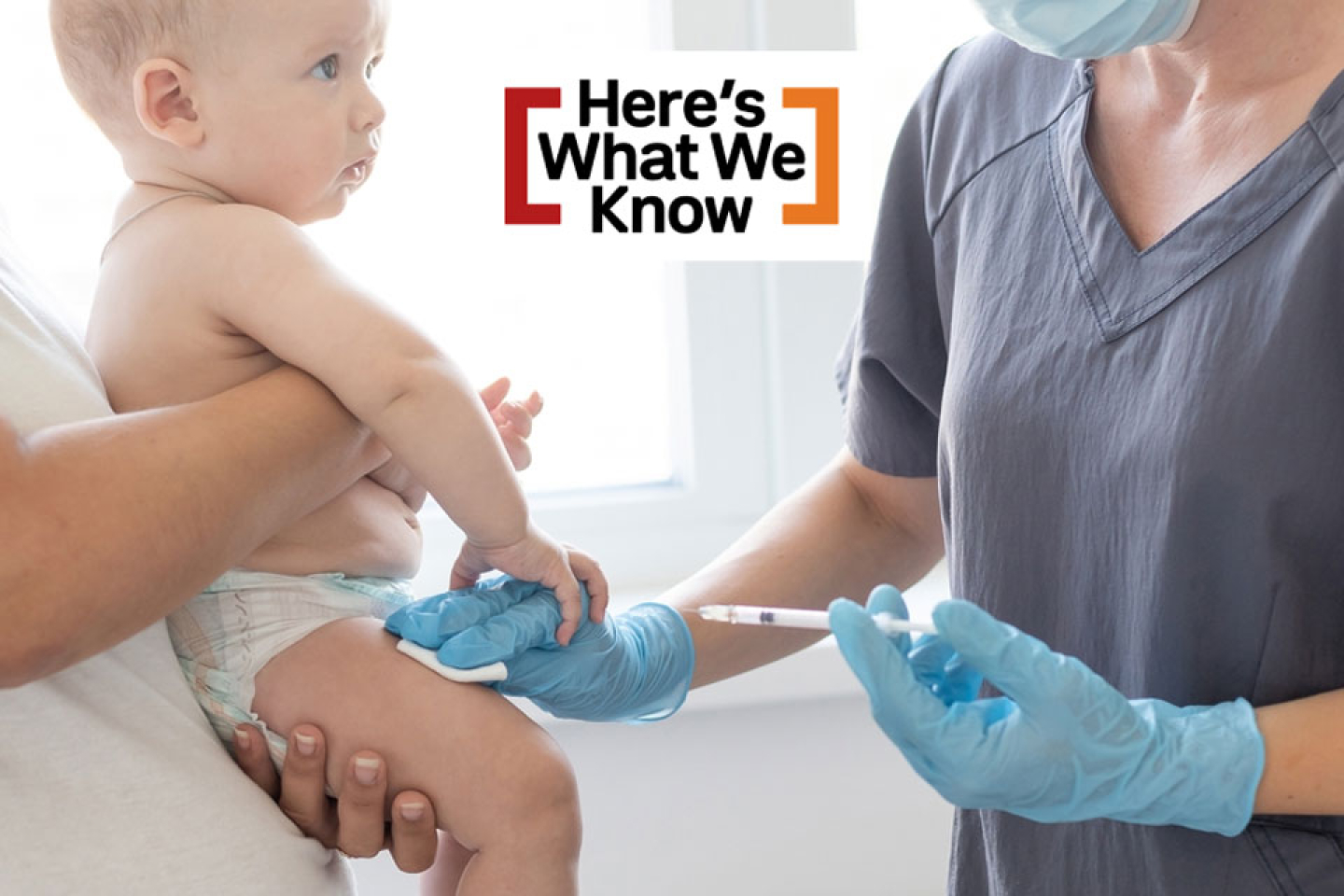
On August 10, a recent executive order issued by the White House regarding “Gold Standard Childhood Vaccine Recommendations,” proposes that all children receive 11 vaccines, instead of the 18 that are in place.
The recommendations in the new order aren’t totally new. They’re in line with the guidance issued by the Centers for Disease Control and Prevention (CDC) in January of this year, which restrict 6 formerly recommended vaccines that protect against:
What’s new, however, is that the executive calls for the MMR (measles, mumps and rubella) vaccine to be broken up into three separate shots, without clarity on effectiveness and benefits.
It would force parents to take their children for six separate appointments as opposed to just two. In reality, many may not return for those subsequent vaccines, making children vulnerable to mumps, rubella and measles—a particularly risky proposition at a time when measles cases in the U.S. have been rising, due in part to falling vaccination rates.
And here’s a very practical reason why breaking up the MMR vaccine is not ideal: There are no separate vaccines targeting measles, mumps and rubella licensed in the U.S., and manufacturers don’t seem inclined to develop them, considering the cost of bringing them to market and the less-than-robust demand for them.
We want to reassure you that Weill Cornell Medicine children’s health providers will continue to recommend the childhood vaccine schedule supported by the American Academy of Pediatrics and the New York City and State Departments of Health. This schedule is based on thousands of scientific studies that demonstrate the safety and effectiveness of vaccines in protecting children’s health.
There have been no changes to school vaccination requirements in New York State, and no changes are expected at this time. Families should continue following current school immunization guidelines.
Both public and private insurance plans continue to cover recommended childhood vaccines. We do not anticipate changes, but we will keep families informed if anything new arises.
Dr. Amanda Kravitz, an instructor in pediatrics and assistant attending pediatrician at Weill Cornell Medicine, says that vaccine schedules are not one-size-fits-all. The schedule proposed by the CDC and the executive order is similar to Denmark’s.
“What works in Denmark is not going to work in the U.S.,” she says. “The U.S. is 50 times the size of Denmark, so it has very different population needs. All of us at Weill Cornell Medicine plan to follow the same well-studied, evidence-based, safe vaccine schedule that we have been using for many years.”
Dr. Sean Cullen, the Friedman Family Foundation Clinical Scholar in Newborn Medicine and an assistant professor of pediatrics at Weill Cornell Medicine, says there are three things he’d like parents to know about childhood vaccines.
We continue to recommend the childhood vaccine schedule endorsed by the American Academy of Pediatrics and the New York State Department of Health, which is supported by decades of research demonstrating the safety and effectiveness of recommended vaccines.
Vaccines remain one of the most effective tools to protect children, families, and communities from serious infectious diseases. Your child’s health is our priority, and we are committed to working with you to keep them safe.
Questions about recent childhood vaccine guidance? Find a pediatrician for your child's care here.

